Echoes from the Tea Fields
Discovering Kahoku Chayama Uta, a traditional tea song passed down through generations.
Beneath the Sedge Hats
茶山のぼりは皆菅の笠
どれが姉やら妹やら
All wear sedge hats as they climb to the tea fields.
Who is the elder sister, and who is the younger?
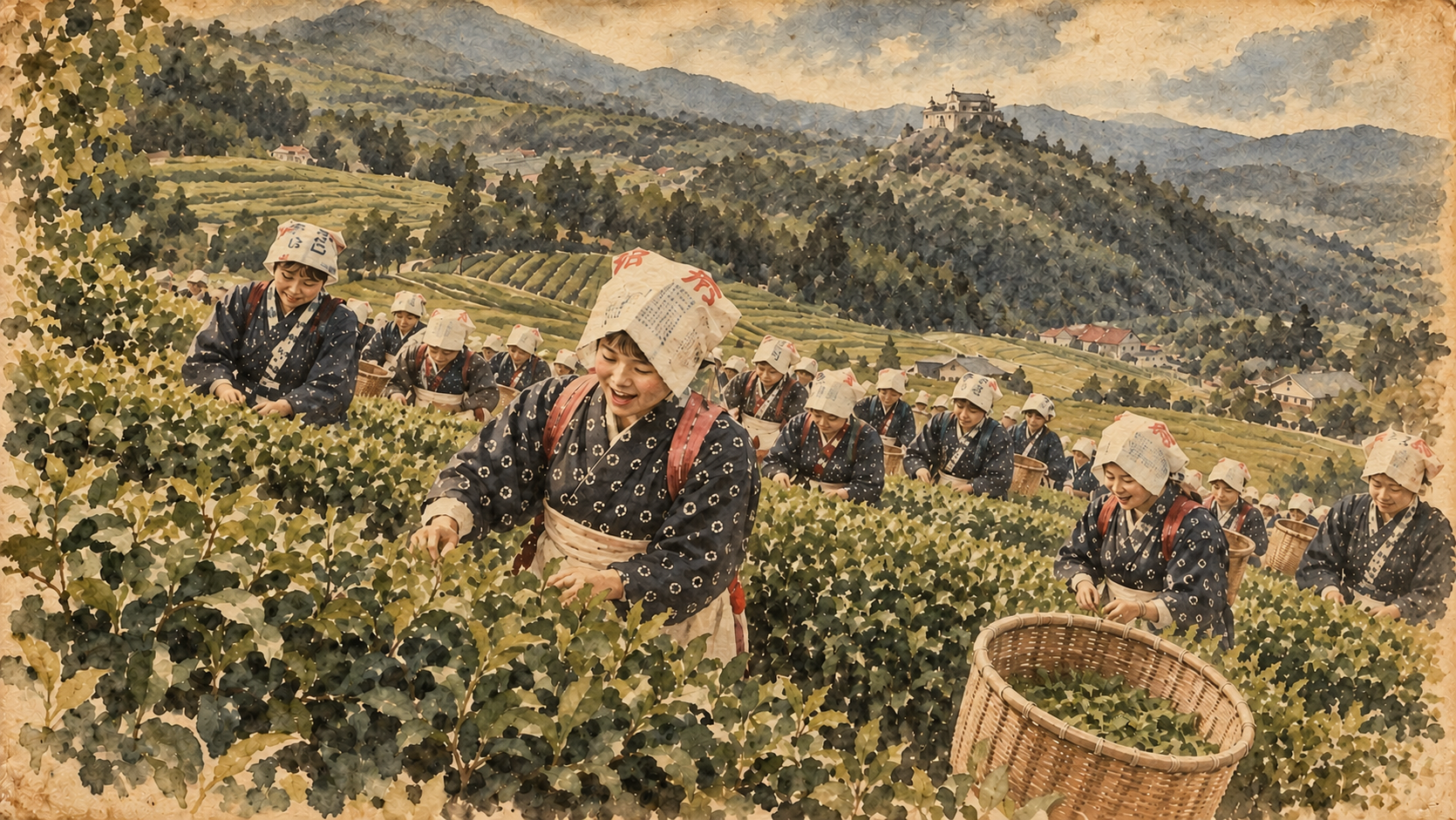
These charming lyrics paint a picture of women making their way up the mountains to harvest tea, their faces partly hidden beneath traditional woven hats.
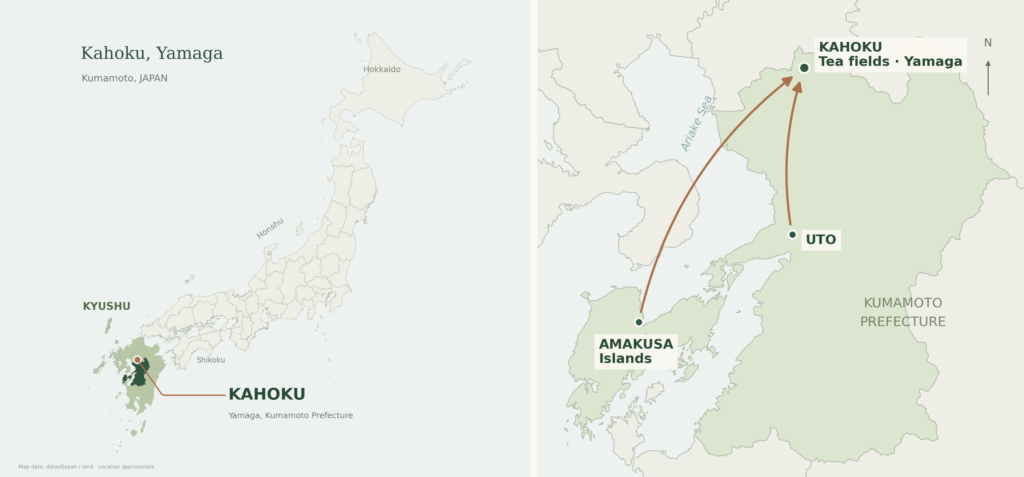
They are part of Kahoku Chayama Uta, a traditional folk song from Kahoku, a mountainous tea-growing region in Yamaga City, Kumamoto Prefecture.
For generations, these songs accompanied the daily lives of people who cultivated and processed tea, capturing not only the rhythm of their work but also the warmth and humor of the people who shared it.
Songs Born from Tea-Making
The origins of Kahoku Chayama Uta date back nearly 200 years, to Japan's Edo period, when tea cultivation was an important part of life in the mountains of northern Kumamoto.
Around Hachijuhachiya, the 88th day after the beginning of spring and a traditional marker of the tea-harvesting season, women traveled from surrounding areas, including Amakusa and Uto, to work in the tea fields.
Wearing traditional sedge hats, they gathered in the mountains to pick fresh tea leaves and help with the demanding work of tea production.
And as they worked, they sang.
Kahoku Chayama Uta preserves songs associated with different stages of tea-making — climbing to the tea fields, picking the leaves, rolling them by hand, and finishing the tea.
These melodies helped ease the repetitive labor and brought a sense of rhythm and enjoyment to the work.
The lyrics also reveal glimpses of everyday life: playful exchanges, observations about fellow workers, and the connections formed among people who gathered for the tea harvest.
A Living Cultural Heritage
As tea production gradually became mechanized, the traditional ways of working in the tea fields began to change.
Yet the songs have continued to be passed down through generations.
Recognized as an Intangible Folk Cultural Property of Yamaga City in 1989, Kahoku Chayama Uta continues to be preserved through the dedication of local communities and preservation groups.
On October 25, 2026, the 34th Kahoku Chayama Uta National Competition was held in Yamaga City, bringing together people of different generations to celebrate and carry forward this tradition.
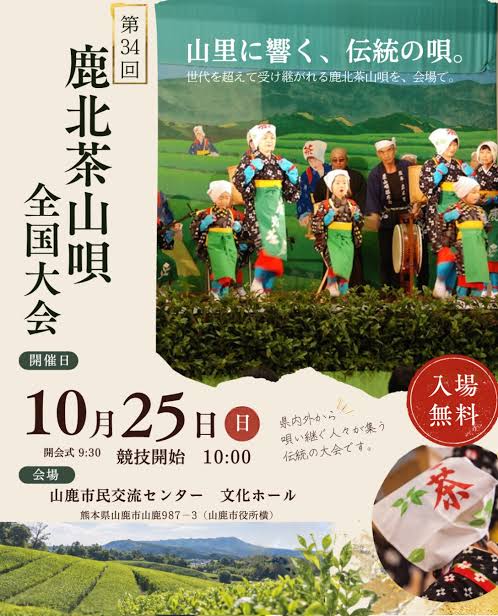
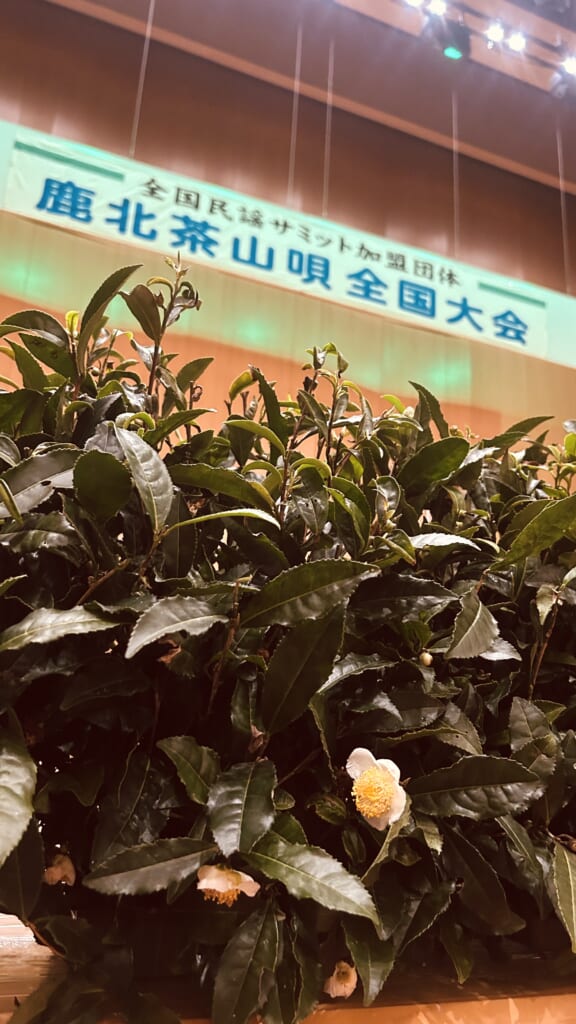
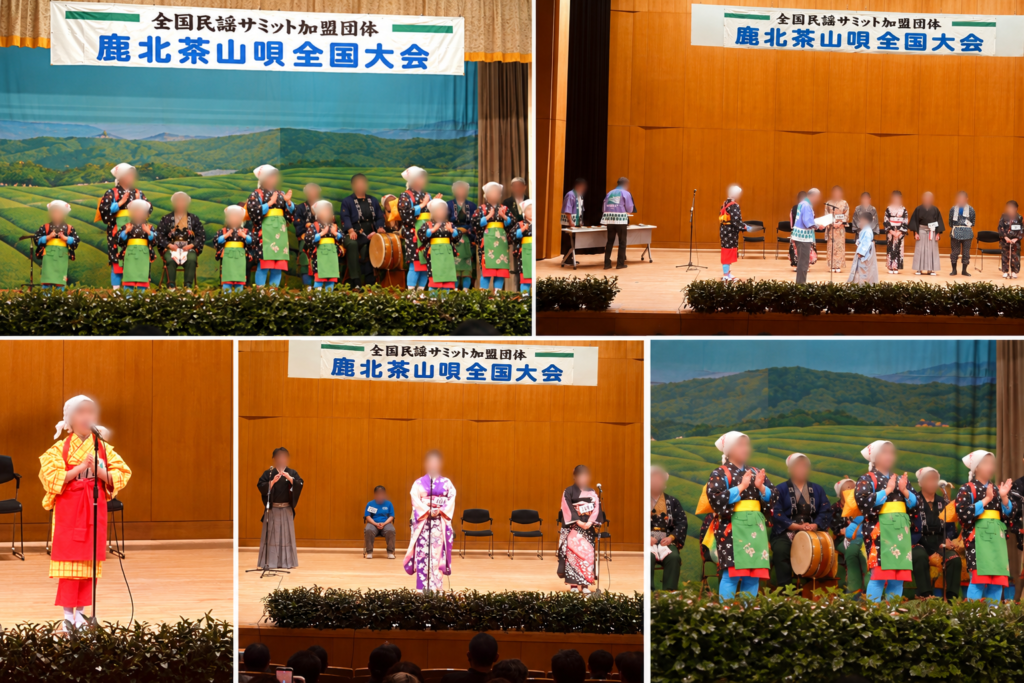
At the competition, performers in traditional attire brought these songs to life, accompanied by the sounds of Japanese folk instruments.
What began as songs accompanying everyday work in the tea fields now finds a new voice on stage, connecting the lives of earlier generations with those of today.
Seeing participants of different generations come together was a reminder that cultural heritage is not simply something preserved from the past, but something kept alive by the people of today.
More Than a Cup of Tea
When we enjoy a cup of tea, we often notice its aroma, flavor, and the landscape where it was grown.
But behind every cup lies a deeper story.
There are the hands that cultivated the leaves, the people who gathered for the harvest, and the songs that once echoed through the mountains.
Kahoku Chayama Uta reminds us that tea is more than an agricultural product. It is part of a living cultural landscape, shaped by generations of people, their work, and their traditions.
At TeaScape, we believe that discovering Japan through tea means exploring not only what is in the cup, but also the stories, people, and traditions behind it.
And sometimes, those stories are still carried in a song.
---
TeaScape | Tea × Escape × Landscape
Discover the spirit of Japan through tea, nature, and local traditions.
📍 TeaScape ー Minamiaso, Kumamoto, Japan